Check Out The Latest NZ Tax Updates
We include updates and reminders about NZ tax changes for those carrying on a business in New Zealand and for individuals who still have tax ties there.

Understanding the new Inland Revenue guidance for Australian businesses operating accommodation in New Zealand
If your Australian-owned business provides accommodation in New Zealand through online platforms like Booking.com or Airbnb, there’s an important Inland Revenue update you should know about.
From 1 April 2025, new rules will apply to how GST is handled for motels and hostels that list on electronic marketplaces.
The new Inland Revenue Determination DET 25/01 sets specific criteria for when accommodation providers can opt out of the electronic marketplace GST rules.
For many small operators, this determination could simplify compliance and ensure GST is reported correctly across both your direct and online bookings.

Is Your Employee’s Ute Exempt from Fringe Benefit Tax (FBT) in New Zealand?
When Sarah, an Australian builder, expanded her business into New Zealand, she bought a double-cab ute for her local project manager to use on-site.
It was used mainly for work — visiting jobs, hauling materials, and checking progress. But when the ute went home with him each night, Sarah was surprised to learn it triggered Fringe Benefit Tax (FBT) in New Zealand.
This is a common trap for Australian small business owners operating across the Tasman. What looks like a standard work vehicle in Australia can have very different tax consequences under New Zealand rules.
Let’s break down when a ute is exempt from FBT and when it isn’t.

Is Interest on a Foreign Loan for a New Zealand Rental Property Tax Deductible?
If you’re an Australian investor purchasing a rental property in New Zealand, you may be wondering whether the interest on an overseas loan can be claimed as a deduction for New Zealand tax purposes.
The good news is that from 1 April 2025, the rules have changed to make this much clearer and, in many cases, the interest will once again be fully deductible.
At NZ Tax Accountants Pty Ltd, we assist Australian-based clients every day with understanding how their New Zealand investments are treated for tax purposes.
Here’s what these recent changes mean and some important things to watch out for.

Year-end tax planning for Australian businesses operating in New Zealand
As we approach the end of New Zealand’s tax year (31 March for most) it’s a good idea to check off these tax planning tips. It will help us to get the best result for you as we prepare your New Zealand income tax returns.
Many businesses have been impacted by COVID and there are tax planning tips in here that may help. So consider these tax tips in the run-up to New Zealand’s year-end so that we can help you to get the best outcome.
Our experienced team is well versed in the things to watch out for when it comes to Australian companies carrying out business activity in New Zealand.

Which foreign exchange rates can you use when converting Australian transactions into New Zealand currency?
Inland Revenue has released a document which approves foreign exchange rate sources which can be used in order to convert a foreign currency amount into New Zealand dollars for tax purposes.
The notice also approves the use of mid-month, end-of-month and rolling average currency conversion methods where appropriate. These methods can be used unless specifically excluded under New Zealand’s Income Tax Act 2007 or if the Commissioner states otherwise.

We now offer Taxpayer Insurance
In the past, a tax audit has been a tax audit. However recent legislative changes now allow Inland Revenue to carry out “mini-type” tax audits which may be in the form of general widespread questions.
Inland Revenue (IRD) can take an interest in the taxation affairs of any New Zealand taxpayer at any time, even if you have never been targeted before. Whether it is an Income Tax, GST or Payroll Return, IRD can still initiate an enquiry.
This can result in time and additional costs for us to liaise with IRD and help you resolve any issues.
We have got you covered.

My Australian-based employee wants to live in New Zealand – Do I have to register as a New Zealand employer?
We often get questions from Australian employers on how to deal with the situation where an employee is looking to resettle in New Zealand or they are looking to employ someone who is based in New Zealand.
An Australian employer has an obligation to account for withholdings to Inland Revenue if they are carrying out business from within New Zealand and they have engaged the employee to assist them to carry out the business activity over there.
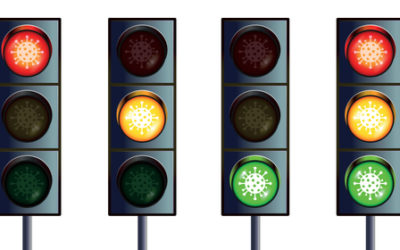
New Zealand’s COVID-19 Traffic Light System
New Zealand is moving to a new way of restricting movements during COVID-19 outbreaks. The new traffic light system commences on 3 December 2021 and is designed to allow greater freedom to vaccinated New Zealanders while curbing freedoms to those who choose to remain unvaccinated.
As you might guess from the name, regions in New Zealand will be zoned either green, orange or red and the zones will change in relation to the local COVID situation.

Do your New Zealand employees need to be vaccinated?
The New Zealand government will be releasing a tool in mid-December to assist New Zealand employers to determine if their employees need to be vaccinated.
This is part of the process designed to protect businesses and workers from COVID-19 as New Zealand prepares itself to transition to the new COVID-19 protection framework which kicks in from 3 December 2021.

“The bubble is back” – New Zealand reintroduces support for businesses impacted by the latest lockdown
The New Zealand government has provided details with regard to support for small businesses impacted by the latest COVID – related lockdown.
That lockdown commenced late on Tuesday evening and affects all of New Zealand for 3 days with Auckland being locked down for 7 days.

New Zealand Moves The Goalposts With Regard To Rental Properties And Tax
The New Zealand government has announced a number of changes that will directly impact on taxpayers who own a residential rental property in New Zealand.
Some of the changes will only impact on you if you purchased a house on or after 27 March 2021 while some of the changes will impact on all taxpayers who own residential rental properties in New Zealand.

Inland Revenue Clamping Down On Sales Of New Zealand Properties Bright-Line Rule
Inland Revenue is in the process of contacting taxpayers who they believe will be subject to the new bright-line test as a result of selling properties in New Zealand that were purchased after 1 October 2015.
The bright-line test was introduced to provide Inland Revenue with some certainty on when there was an “intention to sell” at a profit when someone purchased a property.
If your property was sold within 2 years of acquisition, and you were not lived in for at least 50% of the time, then chances are you are going to be caught under the bright-line rule which made the profits subject to income tax.
What our clients say

NZ Tax Returns